
The Importance of Continuing Education in Equine Hoof Care
By Ohio Barefoot Hoof Trimming
The horse's hoof is a remarkable and complex structure. It is responsible for supporting the horse's weight, absorbing concussion, providing traction, and helping the horse move efficiently. Because the hoof is constantly adapting to the horse's environment, workload, nutrition, conformation, and overall health, hoof-care professionals should never stop learning.
Continuing education is not simply about collecting certificates or attending seminars. It is about developing a deeper understanding of the horse and continually improving the decisions we make for each individual hoof.
Hoof Care Is Always Evolving
Our understanding of equine biomechanics, anatomy, nutrition, lameness, and hoof pathology continues to develop. Conditions such as laminitis, navicular-related pain, thin soles, distorted hoof capsules, negative palmar/plantar angles, and other hoof problems require more than simply knowing how to trim a hoof.
Modern educational programs increasingly bring veterinarians, farriers, researchers, and hoof-care professionals together to examine these complicated issues. Progressive Hoof Care Practitioners, for example, has emphasized hands-on education in equine podiatry, including anatomy, biomechanics, diagnostic imaging, and therapeutic approaches.
Learning Helps Us Recognize Problems Earlier
One of the greatest benefits of continuing education is improving our ability to recognize changes before they become major problems.
A hoof-care professional who continues studying may become better at recognizing:
Changes in hoof capsule distortion
Abnormal hoof growth
Sole depth and sole protection concerns
Changes associated with laminitis
Heel contraction and imbalance
Flares and excessive wall loading
Changes in breakover
Signs that may indicate underlying lameness
When a hoof problem requires veterinary evaluation
The goal isn't to diagnose conditions outside one's professional scope. Instead, education helps us recognize when something doesn't look normal and when it is appropriate to involve the veterinarian.
Every Horse Is an Individual
There is no single trim that is appropriate for every horse.
A young, healthy pasture horse may have very different hoof-care requirements from an older performance horse or a horse recovering from a hoof pathology. Environment, exercise, conformation, diet, genetics, and previous hoof-care history all influence the hoof.
Continuing education helps hoof-care professionals avoid a "one-size-fits-all" approach and instead evaluate the horse in front of them.
Hands-On Learning Is Especially Valuable
Reading an article or watching a video can be useful, but hands-on clinics provide another level of learning. Working alongside experienced professionals allows hoof-care practitioners to see different approaches, discuss difficult cases, and develop practical skills.
Organizations such as the Progressive Hoof Care Practitioners provide online hoof-care classrooms, webinars, videos, podcasts, and educational events designed to help professionals continue developing their knowledge.
Progressive Hoof Care Practitioners also identifies professional development, certification, and educational resources as important parts of supporting the hoof care profession and horse welfare.
Continuing Education Builds Better Communication
Good hoof care is rarely performed in isolation.
The best results often come from communication between the horse owner, hoof-care professional, veterinarian, nutrition professional, and other members of the horse's care team.
The more educated we become, the better we can communicate what we see. We can discuss hoof changes objectively, understand veterinary recommendations more effectively, and help horse owners understand why a particular management plan may be appropriate.
Education Also Means Being Willing to Question Yourself
Continuing education isn't about proving that everything we have learned in the past was correct.
It is about being willing to ask:
"Is there something new I should know?"
Experience is extremely valuable, but experience combined with continued learning can be even more powerful. New research, diagnostic techniques, imaging, materials, nutritional knowledge, and approaches to hoof management can challenge long-held assumptions.
A good hoof-care professional should remain curious.
The Horse Benefits Most
Ultimately, continuing education isn't about the professional. It’s about the horse.
Every improvement in our knowledge has the potential to improve the care we provide. Whether that means recognizing a developing problem sooner, understanding hoof biomechanics better, improving trimming technique, knowing when to seek veterinary assistance, or communicating more effectively with an owner, education can translate into better outcomes.
The hoof-care industry itself recognizes this need. Current educational programs continue to address topics ranging from laminitis and hoof distortion to anatomy, trimming, hoof protection, nutrition, and business practices.
Never Stop Learning
A hoof-care education doesn't end when school or an apprenticeship ends. That is only the beginning.
Clinics, conferences, webinars, veterinary publications, research, case discussions, mentorship, and hands-on experience all provide opportunities to grow.
For those of us dedicated to barefoot hoof care, continuing education is particularly important because we have a responsibility to continually improve our understanding of the natural hoof, biomechanics, pathology, and the individual needs of each horse.
The best hoof-care professionals aren't the ones who think they know everything. They are the ones who never stop learning.
For Ohio Barefoot Hoof Trimming, continuing education is part of our commitment to providing thoughtful, informed, and individualized hoof care—because every horse deserves our best effort, and our best effort begins with continuing to learn.
Why Keeping a Regular Farrier Schedule Matters for Your Horse
A healthy horse starts from the ground up. The condition of a horse’s hooves affects its comfort, movement, balance, and overall soundness. One of the most important parts of maintaining healthy feet is establishing a regular farrier or barefoot-trimming schedule.
Waiting until a hoof looks overgrown or a horse becomes uncomfortable can allow small problems to develop into much larger ones.
How Often Should a Horse Be Trimmed?
There is no single schedule that works for every horse. Hoof growth varies depending on the individual horse, season, workload, diet, environment, age, and existing hoof condition.
For many horses, a trimming interval of approximately 4–6 weeks is common. Some horses may need attention more frequently, particularly those with hoof distortions, metabolic concerns, laminitis history, or significant imbalance.
The goal should not simply be to trim on a calendar. The goal is to maintain the hoof before excessive growth and distortion occur.
Why Consistency Is Important
As a hoof grows, the relationship between the hoof wall, sole, frog, bars, and internal structures changes. Allowing excessive growth between appointments can contribute to:
· Long toes
· Flares in the hoof wall
· Uneven loading
· Excessive heel growth
· Changes in breakover
· Sole bruising
· Cracks and separations
· Changes in the horse’s movement
Regular appointments allow the farrier or barefoot trimmer to make smaller, more controlled adjustments rather than having to correct a severely distorted hoof all at once.
Seasonal Changes Can Affect the Schedule
Hoof growth is not always consistent throughout the year. Many horses experience changes in growth depending on temperature, moisture, pasture conditions, workload, and overall health.
During periods of rapid growth, a horse may need to be seen sooner than usual. Wet conditions can also soften the hoof, while dry conditions may make the hoof more susceptible to cracking and chipping.
A good hoof-care professional will evaluate the horse’s feet at each visit and adjust the schedule when necessary.
Horses With Hoof Problems May Need More Frequent Attention
Horses dealing with hoof problems often benefit from a more individualized schedule.
Conditions such as laminitis, hoof wall flares, thin soles, contracted heels, negative palmar/plantar angles, and other hoof distortions may require more frequent monitoring and gradual changes.
The objective is to support healthier hoof mechanics while avoiding excessive changes during a single appointment.
Don’t Wait for the Horse to Become Lame
One of the biggest mistakes owners can make is waiting until a horse shows obvious discomfort before scheduling hoof care.
A horse can compensate for hoof imbalance for some time before the problem becomes noticeable. Changes in stride, reluctance to move, shortened steps, stumbling, difficulty turning, or increased sensitivity on hard ground can all be reasons to have the feet evaluated.
Regular hoof care helps identify changes before they become major problems.
Communication Between Owner and Farrier Is Essential
A successful hoof-care program is a partnership.
Owners should communicate changes they notice between appointments, including:
· Changes in movement
· Increased sensitivity
· Changes in workload
· Changes in diet or pasture access
· New cracks or hoof wall separation
· Changes in the horse’s environment
· Previous or current hoof problems
Photographs taken between appointments can also help track changes over time.
What Happens When Appointments Are Missed?
Missing one appointment doesn’t necessarily create a serious problem, but repeatedly extending the interval can make maintaining proper hoof balance more difficult.
Once the hoof becomes excessively long or distorted, the professional may need several trimming cycles to gradually improve its shape and mechanics.
Prevention is usually easier than correction.
Build a Schedule That Fits Your Horse
Instead of asking, “How many weeks should I wait?”, a better question is:
“How frequently does my horse need its feet evaluated to stay comfortable and balanced?”
A young horse, performance horse, senior horse, barefoot horse, or horse recovering from a hoof problem may all require different schedules.
Your farrier or barefoot trimmer should evaluate the horse’s individual needs and establish an appropriate interval.
Healthy Hooves Are a Long-Term Commitment
Hoof care isn’t a once-in-a-while task. It is an ongoing part of responsible horse ownership.
A consistent schedule helps maintain hoof shape, balance, and comfort while giving your hoof-care professional an opportunity to monitor changes over time.
Don’t wait for the hoof to become a problem. Stay ahead of the growth, monitor changes, and make regular hoof care part of your horse’s routine.
Healthy feet provide the foundation for a healthy, comfortable horse.
Hoof Trimming a Nervous Horse: Building Trust and Keeping the Horse Safe
Hoof trimming can be challenging when working with a nervous, anxious, or fearful horse. A horse that is uncomfortable having its feet handled may pull away, strike, kick, lean into the handler, or become increasingly stressed. The goal should never be to simply “make the horse stand still.” Instead, successful hoof care begins with understanding the horse's behavior and creating a safe, predictable experience.
Why Are Some Horses Nervous About Hoof Trimming?
There are many reasons a horse may become anxious about having its feet trimmed. Previous negative experiences, pain, lack of handling, poor balance, or fear of unfamiliar equipment can all contribute.
A horse may also become nervous if it has experienced discomfort while standing on three legs. Horses with hoof pain, thin soles, laminitis, abscesses, arthritis, or other musculoskeletal problems may be particularly reluctant to hold a foot up.
Recognizing the difference between fear, pain, and resistance is extremely important. A horse that is acting out may actually be communicating that something hurts.
Start With Trust
Before attempting a full trim, spend time establishing communication with the horse. Allow the horse to become comfortable with your presence and movements.
Some useful steps include:
Approach calmly and avoid sudden movements.
Allow the horse to investigate unfamiliar tools.
Rub and massage the shoulder, neck, and leg before asking for the foot.
Begin by briefly touching the lower leg.
Reward calm behavior.
Gradually increase the amount of time the horse allows its foot to be handled.
The objective is to teach the horse that having its feet handled does not automatically mean something frightening is going to happen.
Keep Sessions Short
A nervous horse may have a limited ability to remain relaxed. Trying to complete all four feet during one stressful session can make future trimming more difficult.
It can be better to accomplish a small amount successfully and end on a positive experience.
For example, the first session might involve simply picking up a foot for a few seconds. As the horse becomes more comfortable, the amount of time can gradually increase.
Read the Horse's Body Language
Good hoof care requires paying attention to what the horse is communicating.
Signs of increasing anxiety can include:
Tension through the body
Raised head
Wide or rapidly moving eyes
Tight muzzle
Tail swishing
Rapid breathing
Pawing
Pulling the foot away
Leaning heavily against the handler
Attempting to move away
These signals should not automatically be interpreted as disobedience. They may indicate that the horse needs a break, more preparation, or an evaluation for pain.
Make the Trim as Comfortable as Possible
The horse's physical comfort matters just as much as its emotional comfort. A nervous horse may struggle to balance if the trim requires it to stand awkwardly or hold a painful foot off the ground for an extended period.
A thoughtful barefoot trim should consider the horse's individual hoof shape, conformation, movement, workload, and existing hoof problems rather than applying the exact same approach to every horse.
When appropriate, trimming can be divided into smaller stages so the horse is not required to stand on three legs for excessive periods.
Safety Comes First
Never sacrifice safety in an attempt to finish a trim.
The handler and hoof-care professional should have an escape route and should avoid placing themselves in positions where they can easily be trapped. A horse that becomes increasingly frightened can become unpredictable very quickly.
If a horse is extremely reactive, painful, or dangerous to handle, professional assistance from an experienced horse trainer, veterinarian, or qualified hoof-care professional may be appropriate before continuing routine trimming.
Patience Creates Better Hoof Care
A nervous horse does not necessarily have to remain a difficult horse to trim. With patience, consistency, appropriate handling, and attention to pain and balance, many horses can become significantly more comfortable with hoof care.
The ultimate goal is not simply to get the hoof trimmed. The goal is to create a horse that feels safe enough to participate in the process.
When trust becomes part of the hoof-trimming routine, both horse and hoof-care provider benefit—and regular hoof maintenance becomes safer, calmer, and more productive.
Rodger Pyle
Hoof care professional
20 years experience.
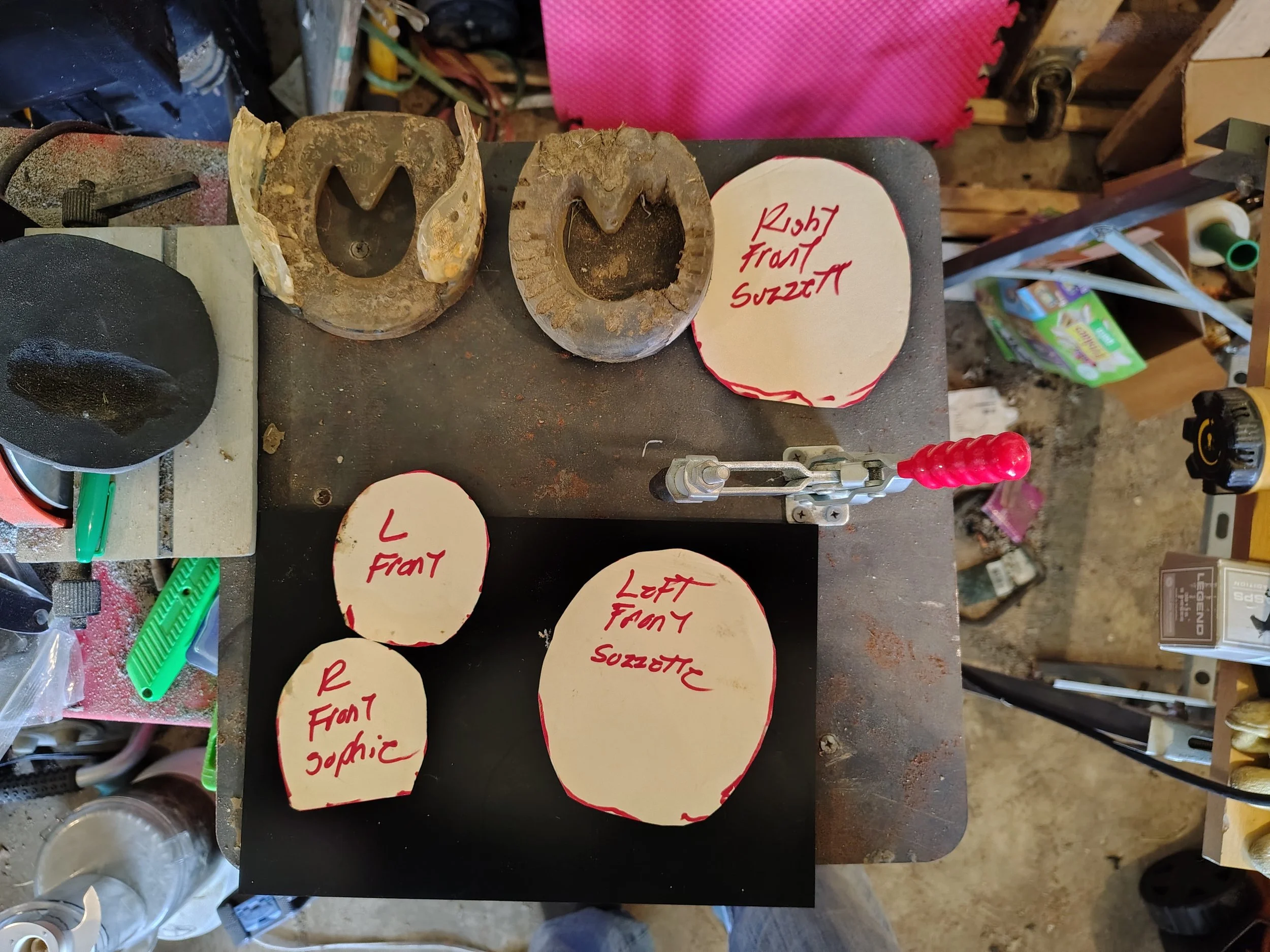
Repurposing composite shoes
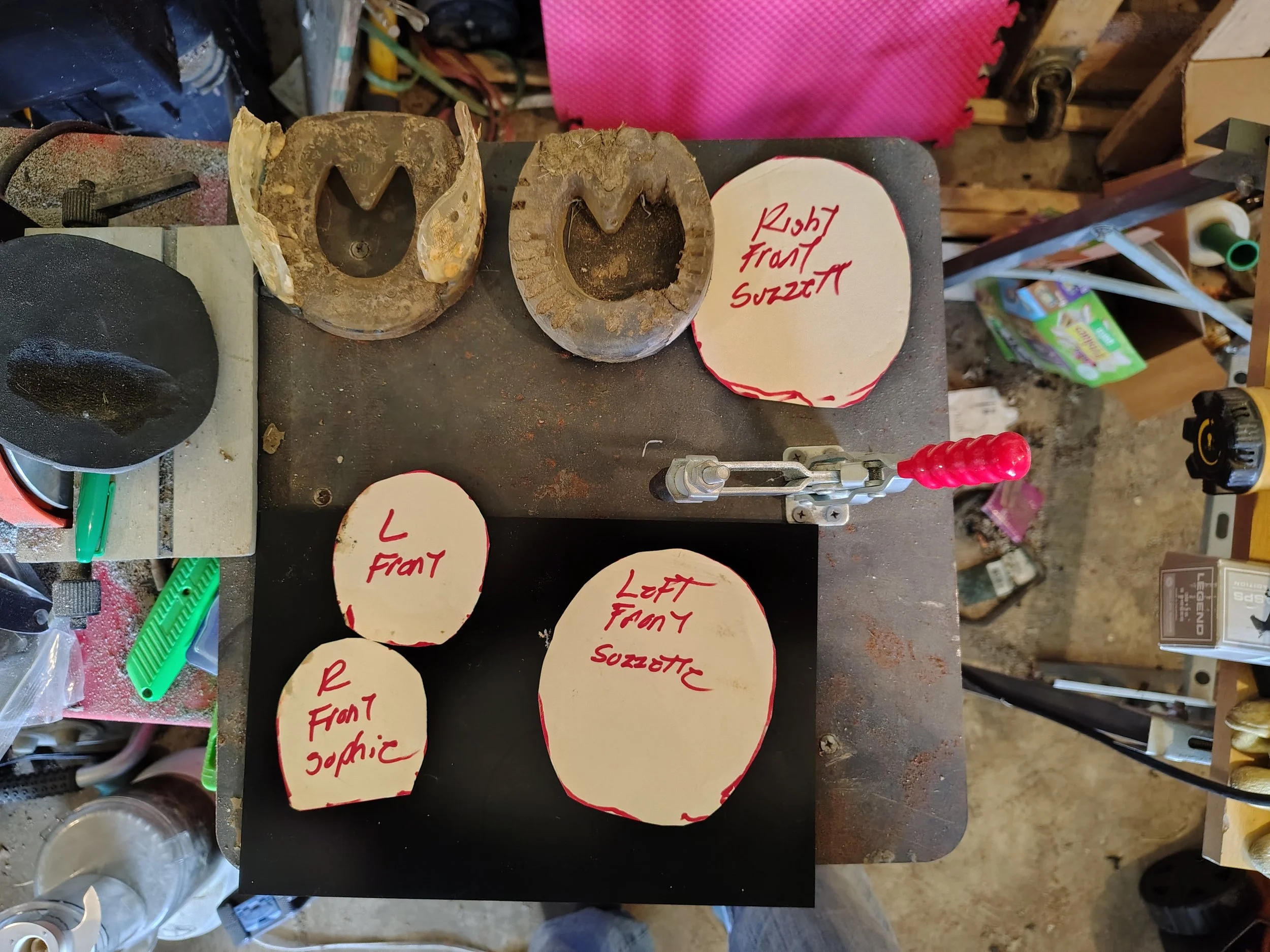
In my practice I do a lot of rehabilitation work on horses recovering from laminitis. One of the tools I use is composite glue on horse shoes. What I love about them is the versatility they offer as far modifying them goes. I cannot begin to explain all of the modifications I have done in the past. A couple years ago I had a really difficult case it took 8 different modifications before I got the horse comfortable.
Another thing I love about them is they are reusable. I have three boxes full of used composite shoes in different sizes that I use to repurpose for my clients. After a fresh trim I will make templates of the hooves using a file folders. I will take them home with me to sue a pattern so I get an exact fit for the horse. This reduces the cost of materials and I pass the saving on to my clients.
Redefine Success
Come back later for new content while we finish construction of our website.
Confidence doesn’t always arrive with a bold entrance. Sometimes, it builds quietly, step by step, as we show up for ourselves day after day. It grows when we choose to try, even when we’re unsure of the outcome. Every time you take action despite self-doubt, you reinforce the belief that you’re capable. Confidence isn’t about having all the answers — it’s about trusting that you can figure it out along the way.
The key to making things happen isn’t waiting for the perfect moment; it’s starting with what you have, where you are. Big goals can feel overwhelming when viewed all at once, but momentum builds through small, consistent action. Whether you’re working toward a personal milestone or a professional dream, progress comes from showing up — not perfectly, but persistently. Action creates clarity, and over time, those steps forward add up to something real.
You don’t need to be fearless to reach your goals, you just need to be willing. Willing to try, willing to learn, and willing to believe that you’re capable of more than you know. The road may not always be smooth, but growth rarely is. What matters most is that you keep going, keep learning, and keep believing in the version of yourself you’re becoming.